A Crisis Born of Neglect
In the summer of 1858, the River Thames became so foul that Parliament could barely function. For several weeks in July and August, a stench rose from the water that was so overpowering that it disrupted the business of government and forced Londoners to confront a sanitation crisis decades in the making.
The conditions that produced what became known as "The Great Stink" had developed gradually. London's population had tripled from under one million to three million over the preceding half-century. The invention and widespread adoption of flushing toilets increased the volume of waste flowing into a sewer system that was entirely inadequate for the task. By 1856, the capital contained approximately 200,000 cesspits and 360 sewers. Over the previous century, more than 100 sewers had been constructed, but they discharged directly into the Thames.
The Metropolitan Commission of Sewers, established in 1848, had ordered the closure of cesspits and required house drains to connect to sewers. The unintended consequence was that all this waste now poured directly into the river that flowed past the Palace of Westminster. Cholera outbreaks in 1831, 1848 to 1849, and 1853 to 1854 had already claimed tens of thousands of lives. The connection between contaminated water and disease was suspected by some medical professionals, notably Dr John Snow, but the prevailing theory remained that disease spread through "miasma" or bad air.
The Heat Intensifies the Problem
The weather in the summer of 1858 proved catastrophic. Temperatures in London during June averaged 34 to 36 degrees Celsius in the shade, rising to 48 degrees Celsius in direct sunlight. Extended dry conditions caused the Thames water level to drop significantly. Raw effluent that would normally have been washed downstream instead accumulated on the riverbanks and baked in the heat.
The scientist Michael Faraday had warned of the river's condition three years earlier. In a letter to The Times published in July 1855, he described dropping white paper into the water to test its opacity and concluded that "the whole river was for the time a real sewer." By 1857, the government was resorting to desperate measures, pouring chalk lime, chloride of lime, and carbolic acid into the Thames in an attempt to mask the stench. Two hundred to two hundred and fifty tons of lime were being spread on the foreshore at low tide each week, costing £1,500 weekly.
Queen Victoria and Prince Albert attempted a pleasure cruise on the Thames during this period but returned to shore within minutes because the smell was unbearable.
Parliament Overwhelmed
The press began calling the event "The Great Stink" by June 1858. The impact on daily life in Westminster was severe. Curtains on the river-facing side of the Palace of Westminster were soaked in lime chloride in an attempt to overcome the smell, but the measure failed. Members of Parliament found committee rooms and the library unusable.
The Examiner reported that Benjamin Disraeli, then Chancellor of the Exchequer and Leader of the House of Commons, left a committee room "with a mass of papers in one hand, and with his pocket handkerchief applied to his nose." MP John Brady informed the First Commissioner of Works that members were unable to work in several rooms due to the stench. Discussions were even held about moving government business to Oxford or St Albans until conditions improved.
The City Press captured the public mood with characteristic bluntness: "Gentility of speech is at an end, it stinks, and whoso once inhales the stink can never forget it and can count himself lucky if he lives to remember it." The Illustrated London News observed with frustration: "We can colonise the remotest ends of the earth; we can conquer India... but we cannot clean the River Thames." Punch magazine noted that "The one absorbing topic in both Houses of Parliament... was the Conspiracy to Poison question. Of the guilt of that old offender, Father Thames, there was the most ample evidence."
The Engineer and the Solution
The crisis finally overcame decades of political inertia and parsimony. Joseph Bazalgette, Chief Engineer of the Metropolitan Board of Works, had been developing plans to solve London's sewage problem since his appointment as Assistant Surveyor to the Metropolitan Commission of Sewers in August 1849. He was promoted to Chief Engineer in 1852 and completed his definitive plans by June 1856.
Bazalgette's scheme was ambitious. He designed a system of small local sewers feeding into progressively larger main sewers, with the largest outflow pipes reaching 11 feet in height. London was divided into high, middle, and low-level areas on both the north and south sides of the river. The Northern and Southern Outfall Sewers would carry waste beyond the metropolitan boundaries to processing facilities.
On 15 June 1858, Disraeli tabled the Metropolis Local Management Amendment Bill. He described the Thames in memorable terms as "a Stygian pool, reeking with ineffable and intolerable horrors." The Bill passed into law on 2 August 1858. It placed responsibility for clearing the Thames on the Metropolitan Board of Works, mandated that sewerage outlets be located outside London boundaries, and authorised the Board to borrow £3 million for construction.
Construction and Engineering Marvels
Work on the high, mid, and low-level systems for both outfall sewers began at the start of 1859 and continued until 1875. The completed system comprised 82 miles of main interconnecting sewers and 1,100 miles of street sewers. Construction required 318 million bricks and 880,000 cubic yards of concrete and mortar. The final cost was approximately £6.5 million.
Bazalgette's plan included three major embankments that transformed the Thames riverscape. The Victoria Embankment runs from Westminster to Blackfriars Bridge, opening in July 1870 and reclaiming over 52 acres of land from the river. The Chelsea Embankment runs from Millbank to Cadogan Pier, opening in July 1874. The Albert Embankment on the south side runs from Westminster Bridge to Vauxhall, completed in November 1869. The embankment project alone cost an estimated £1.71 million.
The system required two spectacular pumping stations to lift sewage from low-lying areas. Crossness Pumping Station, located on Erith Marshes in Bexley, opened in April 1865. Designed by Bazalgette with architect Charles Driver in a Romanesque style, it housed four massive beam engines named Victoria, Prince Consort, Albert Edward, and Alexandra. The Prince of Wales, the future Edward VII, officially opened the station on 4 April 1865.
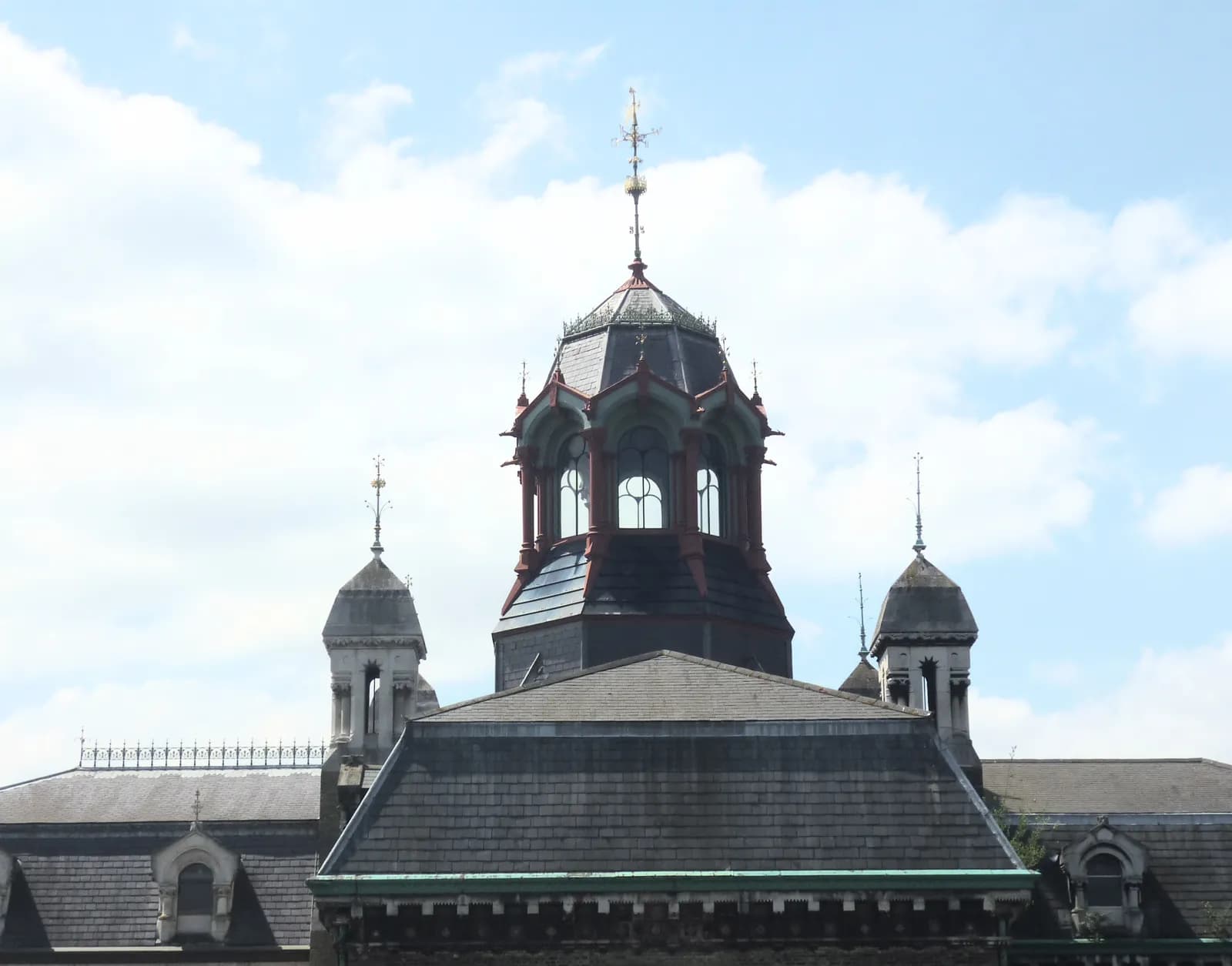
Abbey Mills Pumping Station, built between 1865 and 1868 in Stratford, was designed in an elaborate Italian Gothic style with Byzantine windows and a central octagonal lantern. This Grade II* listed building lifted sewage 36 feet from the low-level sewer into the main Northern Outfall Sewer. Together, these stations represented a marriage of functional engineering and Victorian architectural ambition, demonstrating that even infrastructure dedicated to "the most foul purposes," as one observer noted, could be rendered beautiful.
Legacy and Public Health Impact
Bazalgette's system proved remarkably effective. When cholera struck again in 1866, claiming 5,596 lives, the outbreak was confined almost entirely to the East End between Aldgate and Bow, an area not yet connected to the new sewers. Ninety-three per cent of fatalities occurred within this district. The pattern provided compelling evidence that cholera was water-borne rather than transmitted through miasma.
The engineer's work brought a permanent end to cholera outbreaks in London. Historian Stephen Halliday has noted that a proposed bonus of £6,000 for Bazalgette, equivalent to three times his annual salary, indicates "the depth of public interest and approval" in his achievement. Historian Peter Ackroyd has argued that Bazalgette should be considered a hero of London.
What makes Bazalgette's accomplishment particularly remarkable is its durability. The system was designed for a population of 4.5 million people. More than a century and a half later, it continues to serve a capital that has grown to over 9 million residents. The sewers remain in operation, a testament to Victorian engineering at its finest.
Sir Joseph Bazalgette died in 1891, having transformed the physical and sanitary landscape of London. The Great Stink of 1858, for all its unpleasantness, proved to be the catalyst for one of the most significant infrastructure projects in British history.