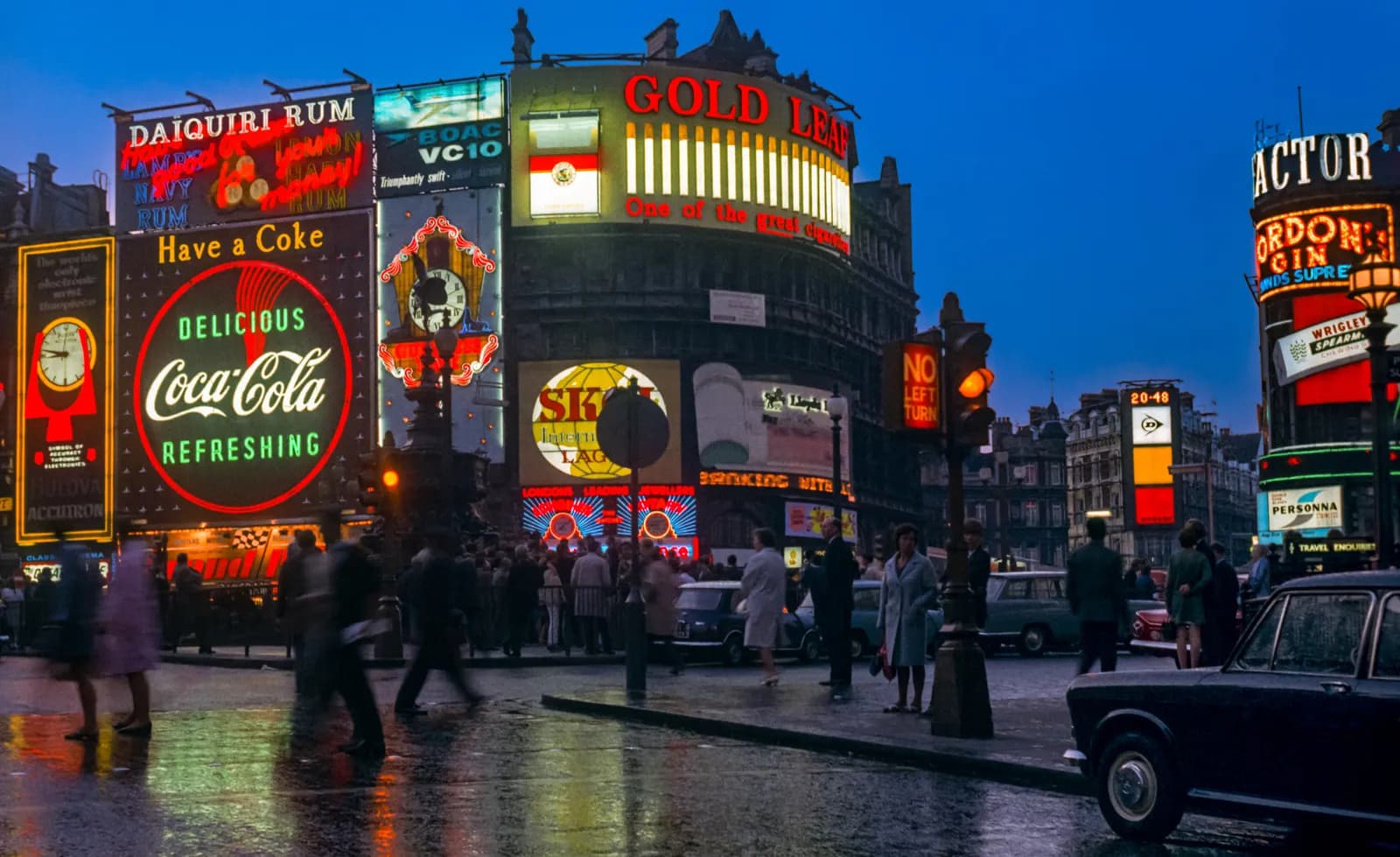
Approximately forty theatres clustered within a square mile of central London generate annual revenues approaching £800 million and attract over 17 million visitors. The West End's concentration of commercial theatre venues, bounded by the Strand to the south, Oxford Street to the north, Regent Street to the west, and Kingsway to the east, represents the highest level of English-language stage entertainment alongside New York's Broadway.
The Ownership Landscape
Five major theatre groups control the majority of West End venues, creating a concentrated commercial ecosystem that shapes what London audiences see. ATG Entertainment operates venues including the Apollo Victoria, Duke of York's, Lyceum, and Savoy. Delfont Mackintosh Theatres, founded in 1991 by producer Cameron Mackintosh and Bernard Delfont, owns eight theatres including the Gielgud, Noël Coward, Prince Edward, and Wyndham's. Nimax Theatres controls the Apollo, Duchess, Garrick, Lyric, and Palace theatres, plus @sohoplace, which opened in 2022 as the first new West End theatre in fifty years. LW Theatres operates the Adelphi, Cambridge, Theatre Royal Drury Lane, Gillian Lynne, His Majesty's, and London Palladium. The Nederlander Organization, an American company, owns the Aldwych and Dominion theatres.
This oligopolistic structure means programming decisions at most West End venues rest with a small number of executives. The concentration of ownership has enabled significant capital investment in recent years, including the Dominion Theatre's installation of a high-resolution LED screen in 2017 and the Theatre Royal Drury Lane's £60 million renovation between 2019 and 2021.
Economic Powerhouse
West End theatres outperformed the Premier League in 2024, attracting 17.1 million attendees compared to football's 14.6 million, an 11 per cent increase above pre-pandemic levels. Box office revenues reached £799 million in 2019, a record that 2023 matched in attendance figures if not yet in revenue. The sector has proven remarkably resilient: while overall London visitor attractions declined 8.8 per cent and cinema attendance dropped 28 per cent, West End theatres posted record-breaking figures.
The district's economic significance extends beyond ticket sales. Nearly one in four international visitors to London attends a West End performance, making theatre a critical component of the capital's tourism economy. The Society of London Theatre, the industry body founded in 1908, estimates that West End productions support approximately 42,000 jobs directly and indirectly.
Global Rivalries and Collaborations
Broadway and the West End together constitute what industry observers term "the highest level of commercial theatre in the English-speaking world." The 2022-2023 Broadway season reported revenues of US$1.54 billion from 12.3 million attendees. The West End's 17.1 million attendees in 2024 outpaced Broadway by nearly five million, though currency fluctuations and differing ticket pricing structures complicate direct revenue comparisons.
The relationship is better understood as symbiotic than competitive. Most major musicals premiere in one district before transferring to the other. "The Lion King" opened at the Lyceum Theatre in 1999 after its Broadway premiere, and has since played over 9,934 performances in London. "Les Misérables," which began at the Barbican in 1985 before moving to the Palace Theatre and later the Sondheim Theatre, has exceeded 15,527 performances. "The Phantom of the Opera" ran for over 15,236 performances at Her Majesty's Theatre from 1986 until its closure in 2023.
Longevity and Legacy
The Mousetrap holds the record for the longest-running production in West End history. Agatha Christie's murder mystery has played continuously since 1952, accumulating over 29,902 performances. The production's longevity demonstrates the West End's capacity to sustain niche audiences over decades.
Several venues have operated continuously for centuries. The Theatre Royal, Drury Lane, occupies a site that has housed theatres since 1663, making it London's oldest continuously operating theatre location. The Savoy Theatre, which opened in 1881, was the first public building in the world to be lit entirely by electricity. The Times reported at the time that "the success of the new mode of illumination was complete."
Current Programming
The 2024-2025 season reflects both established franchises and new work. Disney's "Hercules" opened at the Theatre Royal, Drury Lane in June 2025. "Hadestown," which transferred from Broadway, opened at the Lyric Theatre in February 2024. "Stranger Things: The First Shadow" opened at the Phoenix Theatre in December 2023 and is scheduled to run until December 2026. "The Devil Wears Prada" opened at the Dominion Theatre in December 2024. Upcoming openings include "Paddington: The Musical" at the Savoy Theatre in November 2025 and "Beetlejuice" at the Prince Edward Theatre in May 2026.
Cultural Recognition
The Laurence Olivier Awards, presented annually by the Society of London Theatre, are widely recognised as the highest honour in professional London theatre. "Harry Potter and the Cursed Child" holds the record for most Olivier Awards won by a single production, taking nine trophies in 2017. "Matilda the Musical" previously held the record with seven awards in 2012.
Local Impact
For London residents, the West End functions as both cultural amenity and economic engine. The district generates substantial council tax revenue for Westminster and Camden, and its restaurants, bars, and hotels depend on theatre traffic. Evening performances create predictable surges in Underground and bus usage, particularly around Leicester Square, Piccadilly Circus, and Covent Garden stations.
The concentration of theatres in such a small geographic area means that programming decisions have outsized effects on local footfall. When a major show closes or opens, neighbouring businesses experience measurable changes in trade. This interdependence has led to occasional tensions between theatre operators and residents over noise, congestion, and late-night activity, though the economic benefits generally outweigh complaints.